Thinking about listing in Miami? This step-by-step 2026 guide covers pricing, prep, marketing, negotiation, and closing costs, so you know what to expect before you list your home in Miami.
List Your Home in Miami
A Complete 2026 Guide
A step-by-step look at pricing, preparation, marketing, negotiation, and closing, so you’re ready to list your home in Miami with confidence in today’s market.
Schedule a Consultation — (305) 290-1211Ready to List
Your Home in Miami?
Today’s Miami market looks different than it did even two years ago. Inventory has grown, buyers are more selective, and pricing accuracy matters more than it has in years. Homeowners preparing to list are really asking a bigger question: what does the process actually involve, and how do I avoid the mistakes that cost sellers time and money.
This guide walks through everything involved when you list your home in Miami, from pricing to closing day, along with what current Miami-Dade market data shows sellers right now.
Understanding the Miami Seller’s Market in 2026
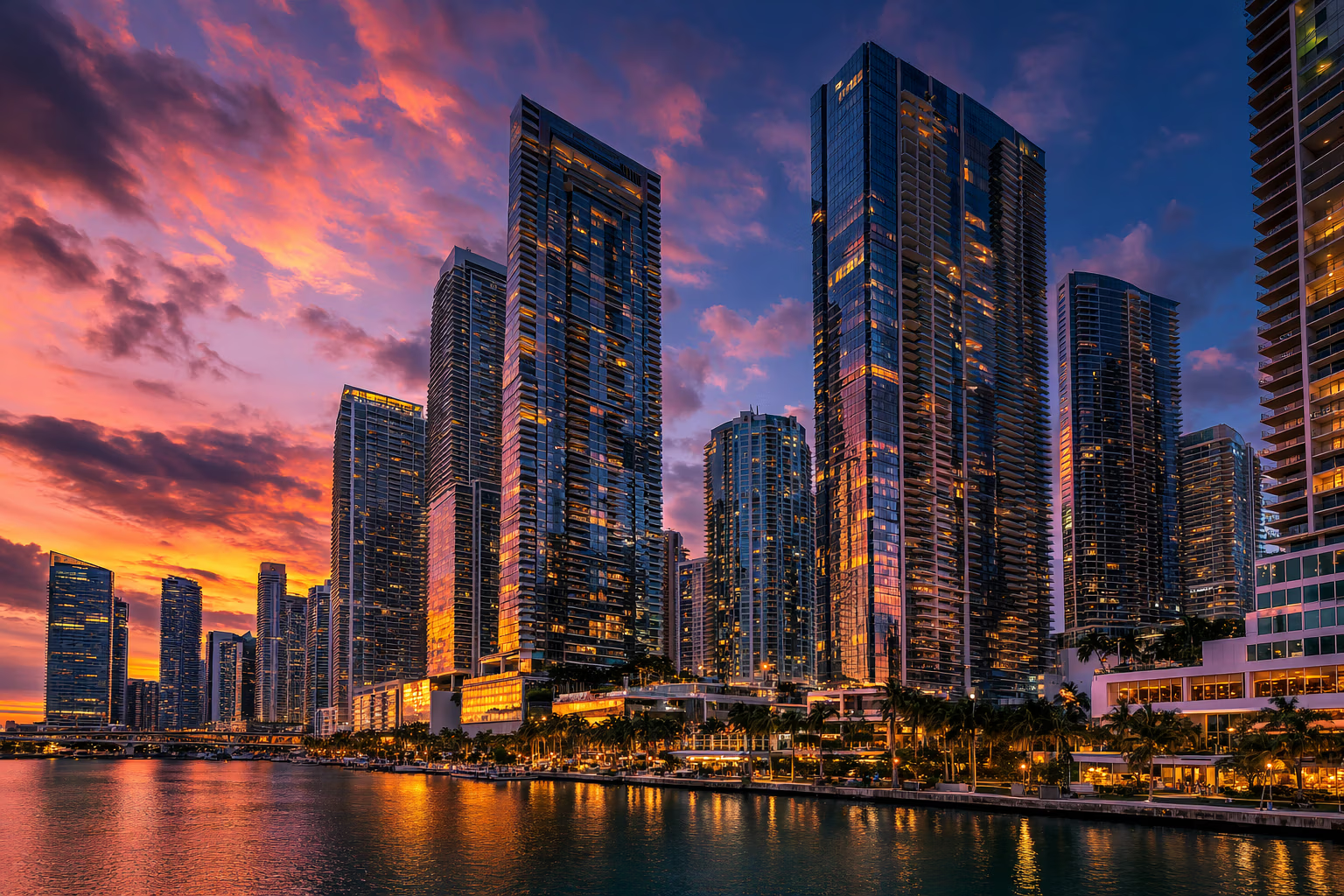
Before pricing a home, it helps to understand what is actually happening in the Miami-Dade market. As of mid-2026, the market is not one single story. Single-family homes remain in tighter supply, generally sitting in seller-favorable territory, while the condo segment has considerably more inventory and is behaving more like a buyer’s market. That divide matters, because a pricing and marketing approach that works for a single-family home in Pinecrest will not necessarily work for a condo in Brickell.
Across the metro, days on market have trended longer than they were a year earlier, and the share of listings taking a price reduction has crept up. At the same time, sale-to-list price ratios for well-priced homes have stayed relatively close to asking, which tells a consistent story: accurately priced, well-presented homes are still transacting, while overpriced listings are the ones sitting.
The right real estate agent depends on your property, goals, timeline, and market conditions. Understanding today’s data is the starting point for a realistic pricing and marketing strategy, not a substitute for one.
Because conditions shift by property type, price point, and neighborhood, current figures should always be verified against the latest release from MIAMI REALTORS® or a comparable market analysis before you finalize a listing price.
Single-Family vs. Condo: What It Means When You List Your Home in Miami
Your listing strategy should depend heavily on whether it’s a single-family house or a condominium, because the two markets are not moving in sync. Single-family inventory has stayed comparatively tight, which generally supports pricing power for sellers who present their home well. Condo inventory has grown more substantially, partly due to statutory reserve and structural inspection requirements that have pushed some owners to sell rather than fund upcoming assessments.
For a single-family seller, this generally means a narrower window of maximum buyer attention right after listing, so pricing and presentation need to be right from day one. For a condo seller, it often means competing directly against a larger pool of similar units, which puts a premium on differentiation: updated finishes, a well-documented and financially healthy association, and pricing that reflects recent closed sales rather than what similar units are currently asking.
Buyers evaluating condos are also paying closer attention to association financials than they have in past cycles, including reserve funding and any pending special assessments. Sellers who can provide clear, current documentation on these items tend to move through the process with fewer surprises during the buyer’s due diligence period.
Start With an Accurate, Data-Driven Valuation
Pricing is the single decision that shapes everything else about how you list your home in Miami. Price too high in a market with more buyer options, and your listing risks becoming stale, which can lead to repeated price cuts and a longer time on market. Price too low, and you may leave money on the table before negotiations even begin.
A sound valuation starts with recently closed comparable sales, not just active listings, since active prices reflect what sellers hope for rather than what buyers have actually paid. Property condition, lot size, updates, school assignment, and location within the neighborhood all factor into an accurate number. Public Miami-Dade Property Appraiser records are a useful starting point for verifying comparable sales and assessed values.
What a Strong Pricing Process Includes
- Closed comparable sales: homes that actually sold in the last three to six months, adjusted for condition and updates
- Current competing inventory: what buyers can choose from right now at your price point
- Absorption rate by property type: single-family and condo markets often move at different speeds in the same zip code
- A defined price-adjustment plan: agreed upfront, in case the market response in the first few weeks calls for a change
Prepare the Home Before It Goes on the Market

Preparation is where sellers often get the best return on a modest investment of time and money. The goal is not to renovate everything. It is to address the items that affect a buyer’s first impression and the items that tend to surface during inspection anyway.
A Practical Pre-Listing Checklist
- Declutter and depersonalize: help buyers picture themselves in the space, in person and in photos
- Address visible deferred maintenance: small repairs now often prevent bigger negotiation leverage for buyers later
- Refresh landscaping and curb appeal: the first impression starts before a buyer opens the front door
- Document roof age, major systems, and permits: buyers, appraisers, and insurers in South Florida pay close attention to this
- Consider a pre-listing inspection: identifying issues before you list gives you time to address them on your terms
Not every improvement pays for itself. A local agent can help you weigh which updates are likely to return value in your specific neighborhood and price range, and which ones are better left for the next owner to decide.
Marketing and Listing Presentation
Most buyers build their shortlist online before ever requesting a showing. Professional photography, accurate and detailed listing copy, and broad digital distribution across the MLS, major portals, and social channels are the baseline expectation when you list your home in Miami today, not an upgrade.
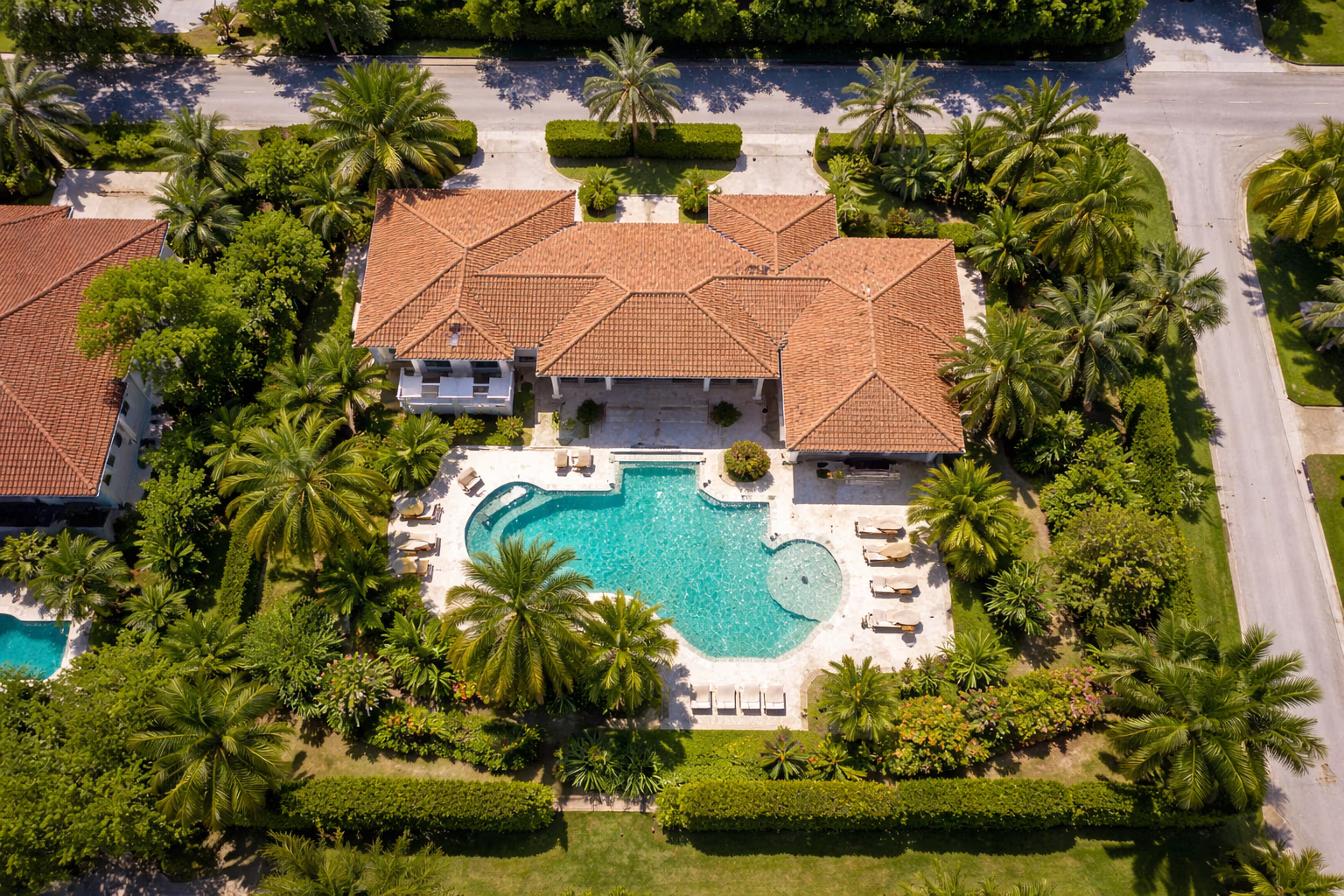
For homes at higher price points, drone photography, twilight shots, and 3D virtual tours help a listing stand out in a market with more competing inventory than in recent years. The goal of marketing is not just visibility. It is presenting the property in a way that attracts serious, qualified buyers rather than casual browsers.
High-quality, well-lit images remain the single biggest factor in whether a buyer clicks into a listing or scrolls past it.
MLS syndication to major portals, plus targeted social promotion, puts your listing in front of active buyers searching Miami-Dade.
Descriptive, accurate copy that highlights genuine features performs better than generic MLS boilerplate.
For larger lots, waterfront, and higher price points, aerial and immersive media help buyers understand the full property.
Showings, Offers, and Negotiation
Once your home is live, showings and offers follow the rhythm of current buyer demand. In a market with more inventory to choose from, buyers tend to compare properties closely, so consistent, honest feedback from each showing is valuable information, not just noise. This is one of the reasons the way you list your home in Miami, and how it’s presented from day one, matters so much.
When offers arrive, price is only one part of the picture. Financing strength, contingency terms, proposed timeline, and the buyer’s overall position all affect how reliably an offer will actually close. A clean offer with a dependable closing timeline can outperform a higher offer weighed down with contingencies once you reach the closing table. Every counteroffer should be built around your net proceeds and your priorities, not just the top-line number.
The Florida Realtors® legal and ethics resources are a useful reference if you want to understand standard contract terms and contingencies before you begin negotiating.
Inspection, Appraisal, and Contingencies
Once you are under contract, the inspection and appraisal periods are where deals are most often renegotiated or, occasionally, fall apart. This is one reason it helps to list your home in Miami with a clear plan for how you’ll respond to inspection requests before they arrive. Buyers typically have a defined window to complete a home inspection, and in South Florida that may include wind mitigation, four-point, roof, or mold assessments depending on the property’s age and condition.
If the buyer is financing the purchase, the lender will also require an appraisal to confirm the home supports the loan amount. In a market where pricing has softened in some segments, appraisal gaps are worth planning for in advance rather than reacting to after the fact.
Common Contingency Periods to Plan Around
- Inspection period: buyer’s window to inspect the property and request repairs or credits
- Financing contingency: time allotted for the buyer to finalize their loan approval
- Appraisal contingency: protects the buyer if the appraised value comes in below the contract price
- Title and survey review: confirms there are no unresolved issues with ownership or property boundaries
Closing Day: Timeline and Typical Costs
A financed Miami transaction commonly takes several weeks from contract to closing once inspection, appraisal, and loan underwriting are factored in. When you list your home in Miami with cash buyers in the mix, transactions can close faster, since they are not dependent on lender timelines.
Florida sellers should generally budget for the following, though your closing statement will reflect your specific transaction:
- Real estate commissions: negotiated between you and your listing agent
- Title and closing fees: vary by title company and transaction complexity
- Documentary stamp tax on the deed: a Florida state transfer tax based on sale price, detailed by the Florida Department of Revenue
- Any negotiated repair credits or concessions: agreed during the inspection period
- HOA or condo estoppel fees: applicable if the property is part of an association
A licensed agent or closing attorney can prepare a net proceeds estimate specific to your property before you list, so there are no surprises at the closing table.
A Realistic Timeline to List Your Home in Miami
Every transaction moves at its own pace, but most sellers want a rough sense of the calendar before they commit. Here’s a general timeline for a financed sale once you’re ready to move forward. Cash transactions can move faster through the contract-to-close stages.
Weeks 1 to 2: Preparation and pricing
Valuation, pre-listing inspection if desired, repairs, decluttering, and professional photography are typically scheduled during this window.
Weeks 2 to 6: Active marketing
The listing goes live, showings begin, and the first two to three weeks usually generate the most buyer attention if the home is priced accurately.
Offer and contract
Once an acceptable offer is negotiated, both parties sign a purchase agreement and the transaction moves into its contingency periods.
Weeks 6 to 8: Inspection and appraisal
The buyer completes their inspection, requests any repairs or credits, and the lender orders the appraisal if financing is involved.
Weeks 8 to 10: Underwriting and closing
The buyer’s loan moves through final underwriting, the title company prepares closing documents, and the sale closes once everything clears.
This range reflects a typical financed transaction. A well-prepared, accurately priced listing can move faster, while more complex properties, cash-flush but slower-moving buyers, or financing delays can extend it. Your agent should be able to give you a more specific estimate once your property and price point are known.
Common Mistakes Miami Sellers Make
Knowing how to list your home in Miami well often comes down to avoiding a handful of predictable mistakes just as much as getting the fundamentals right.
Pricing based on hope, not comparable sales
Anchoring to what a neighbor “heard” a home sold for, instead of verified, closed comparable sales, is one of the most common reasons a listing sits.
Skipping professional photography
In a market with more inventory to compete against, phone photos put a listing at an immediate disadvantage before a buyer ever sees the home in person.
Waiting too long to adjust price
If a correctly marketed listing generates little activity in the first few weeks, that is market feedback. A defined adjustment plan agreed upfront helps sellers respond quickly instead of reactively.
Not budgeting for closing costs early
Sellers who wait until an offer arrives to calculate net proceeds sometimes find their expectations were off. A net sheet before listing avoids that surprise.
Ignoring the inspection period
A pre-listing inspection can surface issues you address on your own terms, rather than under pressure during a buyer’s contingency period.
Not disclosing known issues upfront
Florida law requires sellers to disclose known material defects. Surfacing these early, rather than letting a buyer’s inspector find them, tends to preserve trust and keeps negotiations on track.
Underestimating showing readiness
A home that isn’t consistently ready to show loses momentum during the highest-traffic early weeks. Having a simple daily routine for tidying before showings protects that early window.
Why Work With a Local Miami Agent
The Arango Group is a premium South Florida real estate brand affiliated with Coldwell Banker Realty – Pinecrest. Backed by decades of business experience, the team brings a strategic, concierge-level approach to pricing, marketing, and negotiation for sellers across Miami-Dade, including Pinecrest, Palmetto Bay, Coral Gables, South Miami, and Coconut Grove. Local guidance can make a meaningful difference in how smoothly you list your home in Miami, from pricing accuracy to how offers are negotiated.
A valuation grounded in verified comparable sales and current absorption rates, not a rounded guess.
Professional photography, broad digital distribution, and elevated media for homes that call for it.
Every offer is evaluated on terms, financing strength, and timeline, not just the headline number.
Consistent communication and coordination from your first conversation through the closing table.
The right real estate agent depends on your property, goals, timeline, and market conditions. We encourage you to speak with more than one agent before deciding.
Miami Seller Resources From The Arango Group
A few related guides and tools as you plan to list your home in Miami:
- Get a Free Miami Home Value Estimate, based on current MLS data
- Sell Your Home in Miami With The Arango Group, request a consultation
- Home Not Selling in Miami?, troubleshooting a stalled listing
- How to Choose a Real Estate Agent in Miami, what to ask before you hire
- Buying a Home in Miami, the companion guide for buyers
- Selling Your Home in Palmetto Bay, a hyperlocal seller’s guide
- Miami Real Estate Market Updates, ongoing pricing and demand trends
- Schedule a Consultation, talk through your goals
List Your Home in Miami: Common Questions
Ready to List Your
Home in Miami?
Whether you’re just starting to research the process or you’re ready to list, Kevin Arango, P.A. and The Arango Group can help you evaluate your options, understand the market, and build a clear, well-prepared strategy for your sale. Visit www.thearangogroup.com to learn more.