
Deciding whether to renovate before selling Pinecrest homes comes down to cost versus return. Here’s a practical look at which updates tend to pay off, which don’t, and when selling as-is might make more sense.
Should I Renovate Before Selling My Pinecrest Home?
A factual look at whether to renovate before selling Pinecrest homes, and which improvements actually return value.
It Depends on Your Home’s Condition and Price Tier
There is no single right answer for every Pinecrest seller. A home that is already updated and competing in the $2.5 million to $4.5 million tier benefits from different preparation than an entry-level half-acre property competing closer to $1.35 million.
In general, and consistent with the national cost-recovery patterns tracked in the National Association of REALTORS®’ Remodeling Impact Report, cosmetic updates that improve first impressions, kitchens, primary bathrooms, paint, and landscaping, tend to return more of their cost than structural work.
Major renovations are riskier to recover unless they fix a real deficiency that is actively limiting buyer interest or insurability.
For most sellers, the decision to renovate before selling Pinecrest homes comes down to which updates buyers in your price tier actually notice, not a blanket rule.
Improvements That Generally Return Value in Pinecrest
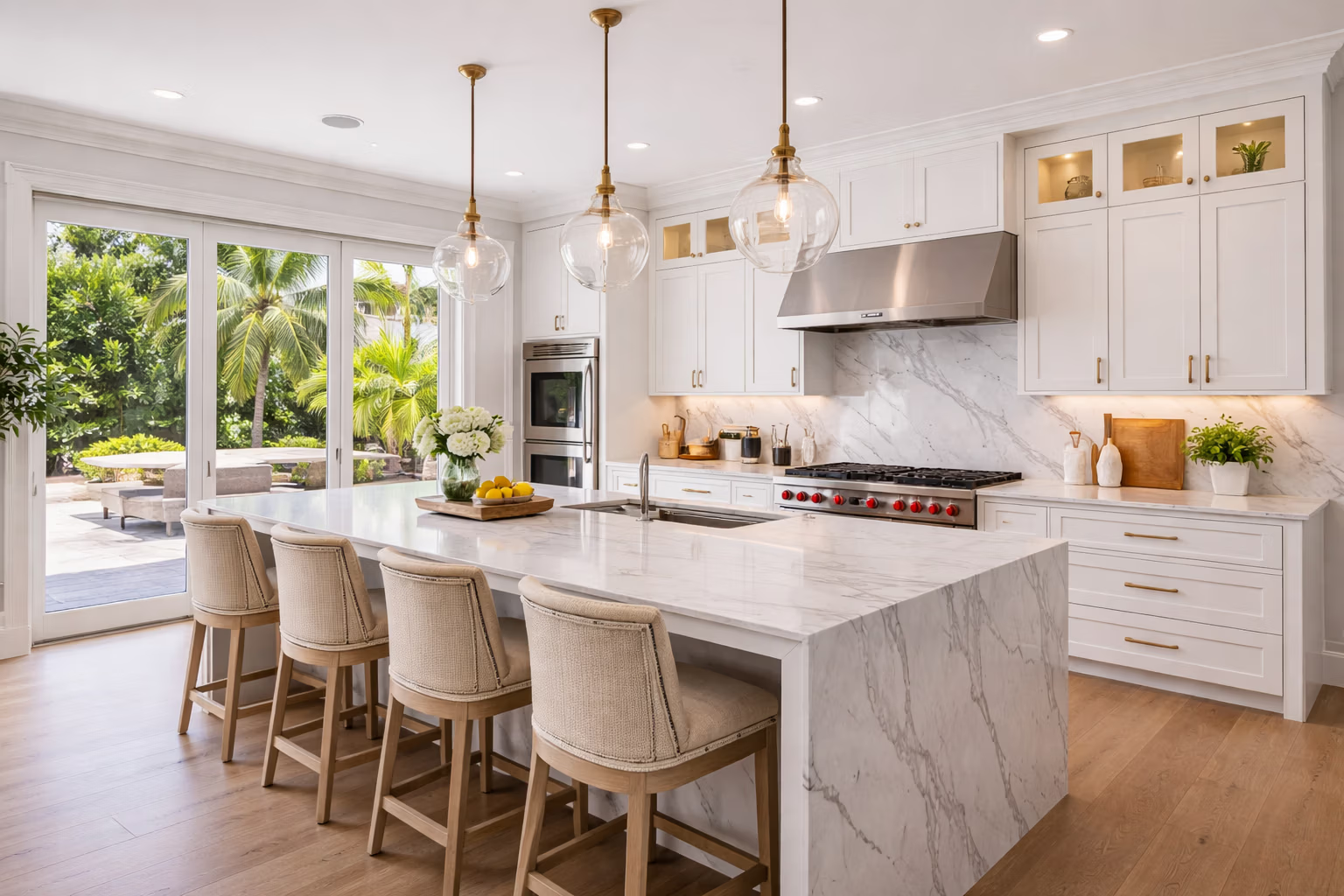
- Kitchen updates. Cosmetic refreshes, cabinet refacing, updated countertops, and modern fixtures tend to make a strong first impression relative to their cost.
- Primary bathroom updates. Similar to kitchens, a dated primary bathroom is one of the first things buyers notice, and a moderate refresh often outperforms a full gut renovation on cost efficiency.
- Landscaping and curb appeal. Mature landscaping is a significant part of how a Pinecrest property presents. Refreshing beds, trimming canopy for photography, and general yard cleanup is a comparatively low-cost, high-visibility investment.
- Paint and cosmetic repairs. Fresh interior and exterior paint, along with addressing small deferred maintenance items, reduces the chance that a buyer’s inspector flags something that becomes a negotiation point later.
These four categories are consistently where sellers see the strongest return when weighing whether to renovate before selling Pinecrest homes.
Improvements That Are Harder to Recover at Resale
Large structural additions, full-scale remodels, and highly personalized finishes are harder to recover dollar-for-dollar at closing, particularly if they push your home meaningfully above the comparable sales for your specific block or sub-area.
An improvement that makes sense for a homeowner planning to stay for years does not always make financial sense for a homeowner preparing to list in the next few months. This is one of the clearest signals for whether to renovate before selling Pinecrest homes with major deferred projects.
The Exception Worth Knowing
If your home has a genuine deficiency that affects insurability, such as an outdated electrical panel or plumbing material flagged on a four-point inspection, addressing it before listing can be worth the cost even if it does not show up as a glamorous upgrade. It removes a real obstacle for buyers and their insurance carriers.
When Selling As-Is Makes More Sense Than Renovating
For a home that needs extensive work, or for a seller who does not have the time, funds, or interest in managing a renovation before listing, selling as-is to a buyer who plans to update or rebuild can be a more efficient path. As-is sales in Pinecrest typically price to reflect the condition and the buyer’s anticipated renovation cost, so the right comparison is not “renovated sale price” versus “as-is sale price” in isolation, but your net outcome after factoring in the cost, time, and risk of the renovation itself. This comparison is really what deciding whether to renovate before selling Pinecrest homes comes down to.
The goal is never to spend the most before you sell. It is to spend where Pinecrest buyers actually pay you back, and skip what they will not.
Kevin Arango, P.A. · The Arango GroupPermitting Considerations Before You Renovate
Any renovation involving electrical, plumbing, structural, or roofing work in Miami-Dade County typically requires a permit, and unpermitted work can create disclosure obligations and buyer concerns at resale, even years later.
Before starting a pre-listing renovation, confirm with a licensed contractor whether the specific scope of work requires a permit, and keep documentation of any permits pulled and finalized.
Buyers and their inspectors in Pinecrest’s price tiers are often attentive to permit history, and a well-documented renovation can support your asking price more effectively than the same work done without permits.
If a prior owner completed unpermitted work, disclose what you know and discuss with your agent how to address it before listing. Permit history is one of the practical details worth reviewing anytime you weigh whether to renovate before selling Pinecrest homes.
Timing a Renovation Around Your Listing Date
Renovation timelines can run longer than expected, particularly for kitchen and bathroom projects that involve custom cabinetry, countertops, or permitted electrical and plumbing work.
If you are planning to renovate before listing, build in buffer time beyond your contractor’s initial estimate, and coordinate with your agent on a realistic listing date rather than setting one before the scope of work is finalized.
A rushed renovation completed under time pressure is more likely to show quality issues that a buyer’s inspector will flag, which can undercut the return you were trying to capture in the first place. Building in realistic time is part of answering whether to renovate before selling Pinecrest homes on a workable schedule.
Cost-Conscious Alternatives to a Full Renovation
Between a full renovation and selling strictly as-is, many Pinecrest sellers find a middle path worth considering.
Addressing a genuine deficiency, such as an outdated electrical panel, while leaving cosmetically dated but functional finishes untouched, can resolve the issue most likely to affect insurability or financing without the cost of a full remodel.
Similarly, a professional deep clean, decluttering, and strategic staging can meaningfully improve how a home presents in photography and in person without the time or expense of construction. Discuss both the full-renovation and middle-ground paths with your agent, using actual comparable sales for homes in similar condition, before committing to a budget. This middle path is often the most cost-efficient answer to whether to renovate before selling Pinecrest homes that need only targeted work.
Getting Multiple Contractor Estimates Before You Commit
Pricing for kitchen and bathroom work, landscaping, and cosmetic repairs can vary significantly between contractors, even for the same scope of work.
Getting at least two or three written estimates before committing to a renovation plan gives you a more realistic sense of actual cost, not just a rough number from a single source.
It also gives your agent better information to weigh the projected cost against the expected return for your specific home, rather than relying on general ranges that may not reflect current material and labor pricing in the Pinecrest market.
Ask each contractor for a written timeline alongside the estimate, since timeline overruns are often a bigger source of frustration than cost overruns for sellers working against a listing date. Contractor estimates are one more data point in deciding whether to renovate before selling Pinecrest homes on your timeline.
Starting With an Agent Walkthrough, Not a Contractor
Before calling contractors, a walkthrough with your listing agent can help prioritize which items are likely to matter to buyers and appraisers in your specific price tier, versus which are personal preference. This sequencing saves money by directing contractor estimates toward the improvements most likely to support your asking price, rather than a broad list of everything that could theoretically be updated. An agent walkthrough is usually the fastest way to answer whether to renovate before selling Pinecrest homes in your specific situation.
How to Decide for Your Own Pinecrest Home
There is no universal answer to whether to renovate before selling Pinecrest homes. A recently updated property in the $3 million tier faces different buyer expectations than an original 1970s home competing near $1.4 million.
The starting point is always the same: an honest walkthrough with your agent, followed by a review of current comparable sales for homes in similar condition. That combination tells you far more than a general checklist of popular upgrades.
Sellers who ask whether to renovate before selling Pinecrest homes often assume more work is always better. In practice, targeted fixes, kitchens, primary bathrooms, paint, and landscaping, tend to outperform large-scale remodels on cost efficiency.
If your home has a genuine deficiency affecting insurability or financing, addressing that single issue is usually a better use of your budget than a broad renovation aimed at maximizing price.
Ultimately, the decision to renovate before selling Pinecrest homes should be driven by your specific price tier, timeline, and the comparable sales your agent pulls for your block, not by a general rule that applies to every property.
Practical Takeaway
If you are weighing whether to renovate before selling Pinecrest homes, start with a walkthrough and a comparable-sales review before calling a single contractor.
Renovate Before Selling Pinecrest: Common Questions
Considering Listing Your Pinecrest Home?
Whether to renovate before selling Pinecrest homes isn’t a one-size-fits-all decision. Kevin Arango, P.A. and The Arango Group can help you decide what is actually worth doing before you list, and what is not.